
Review · ROME
Rome Street Food: Delights at Campo dei Fiori & Ghetto Area
Come hungry, leave happily full. This 2.5-hour walking tour links Rome’s food traditions with the streets where they developed, moving from Campo de’ Fiori to the Jewish Ghetto and Largo Argentina. I like the generous food portions and the way guides such as Ramona, Francesca, Mattia, Barbara, and Arianna add history to each bite. I also like the strong value at $41 per person, with five food stops plus small samples of wine and beer.
The main caution is dietary. A vegetarian option is possible only if requested ahead of time, while vegan, gluten-free, and dairy-free choices are not available. You will also spend most of the tour standing and walking over cobblestones, and the Jewish Ghetto gets only one main tasting stop, which may disappoint you if food from that neighborhood is your chief interest.
Key points to know before booking
- Five food stops in 2.5 hours: Expect Roman pizza, cured meats, supplì, Jewish-style fried artichoke, and gelato, with portions substantial enough to cover much of lunch.
- The meeting point is easy to find: Look for the statue of Giordano Bruno in the middle of Campo de’ Fiori.
- The route joins food and history: You visit Campo de’ Fiori, Via del Biscione, Via dei Chiavari, the Jewish Ghetto, and Largo Argentina.
- Morning and afternoon tours differ: A morning departure may include olive oil, truffles, and balsamic vinegar at the market, while an afternoon tour may miss the market activity.
- The guide matters here: Francesca, Ramona, Mattia, Barbara, Arianna, and others have been praised for friendly explanations and useful food tips.
- Come prepared to stand: Seats are not guaranteed, pets are not allowed, and the experience is not suitable for wheelchair users or people with limited walking capacity.
Starting under Giordano Bruno in Campo de’ Fiori
Your guide meets you beneath the statue of Giordano Bruno, which sits in the middle of Campo de’ Fiori. This is a practical meeting place because the square is a clear landmark, but arrive with enough time to find the statue among the market stalls, visitors, and surrounding streets.
Campo de’ Fiori is a fitting place to begin. The square is known for its food market, family-run shops, bakeries, and daily Roman energy. The first part of the tour gives you time to look around while your guide explains how food fits into ordinary life in Rome.
The market experience depends on your start time. A morning tour may include tastes of olive oil, truffles, and balsamic vinegar. An afternoon tour may take place after the market has packed up. One participant specifically noted that the market was absent on an afternoon visit, although the square was cleaned remarkably fast. If market stalls matter to you, choose a morning departure after checking the available start times.
More Street Food Tours in Rome:
- Rome: Street Food Tour with Local Guide
★ 4.8 · 4,077 reviews - Rome: Trastevere & Campo de Fiori Street Food Walking Tour
★ 4.9 · 2,768 reviews - Rome Street Food Tour with Local Guide
★ 5.0 · 2,361 reviews
Pizza, cured meats, and the Roman way to start lunch
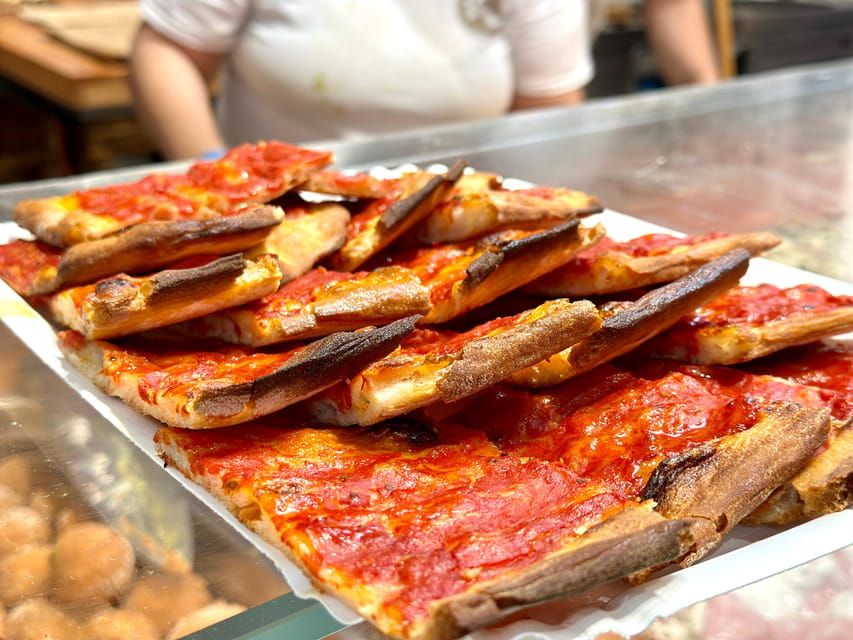
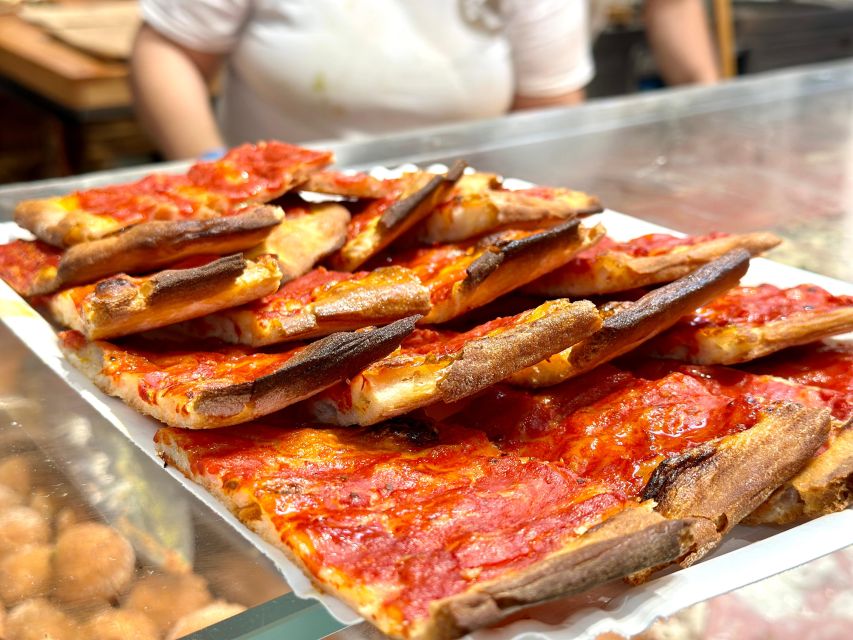
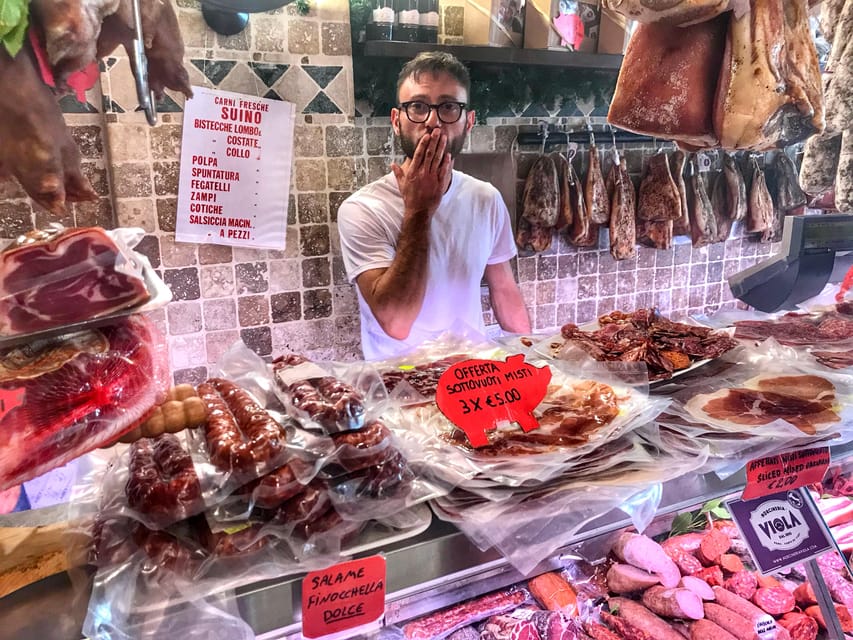
The early tastings focus on familiar Italian flavors, but the setting gives them more meaning. You stop at an historic bakery for freshly baked Roman pizza, then visit a local shop that has been serving artisanal cured meats since 1890.
The pizza is one of the tour’s most praised foods. One visitor called the Roman pizza second to none, while another said the salami and pizza were especially good. These are not tiny decorative samples designed only for a photograph. The portions can be filling, so pace yourself if you plan to eat dinner later.
The cured meat stop also gives you a useful introduction to the difference between tasting food in a shop and ordering a random plate in a restaurant. Your guide can explain what you are eating and how Italian food traditions developed around local shops, family recipes, and simple ingredients.
A small sample of wine is included, as is a sample of beer. Drinks beyond those samples are not included. This is worth remembering if you prefer to drink with every course or need extra water during Rome’s warmer months.
Via del Biscione and an easy-to-miss passageway
From Campo de’ Fiori, the route continues along Via del Biscione. This is a short walking section, roughly 10 minutes, but it helps connect the food stops with the city’s older streets.
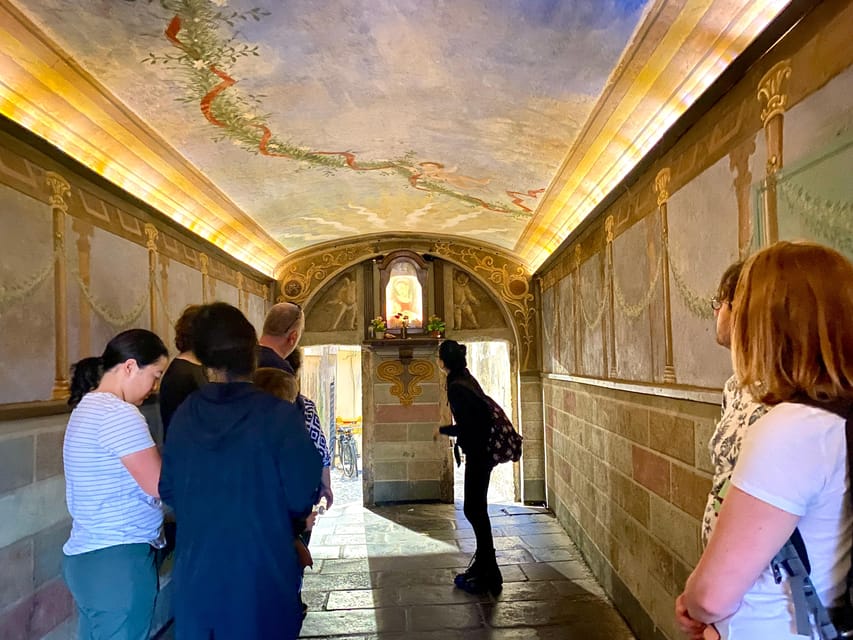
Along the way, you visit an ancient passageway with frescoes and a shrine. It is the kind of detail you could easily miss when walking alone from one major monument to another. The stop is brief, but it adds texture to the tour and shows how Rome often places a small religious or artistic surprise in an ordinary-looking lane.
The guide’s commentary is important here. The food is the main draw, but the walk works best when you want to understand how the neighborhoods fit together. Several guides have been praised for explaining not only the dishes but also the streets and customs around them.
Via dei Chiavari and the essential supplì
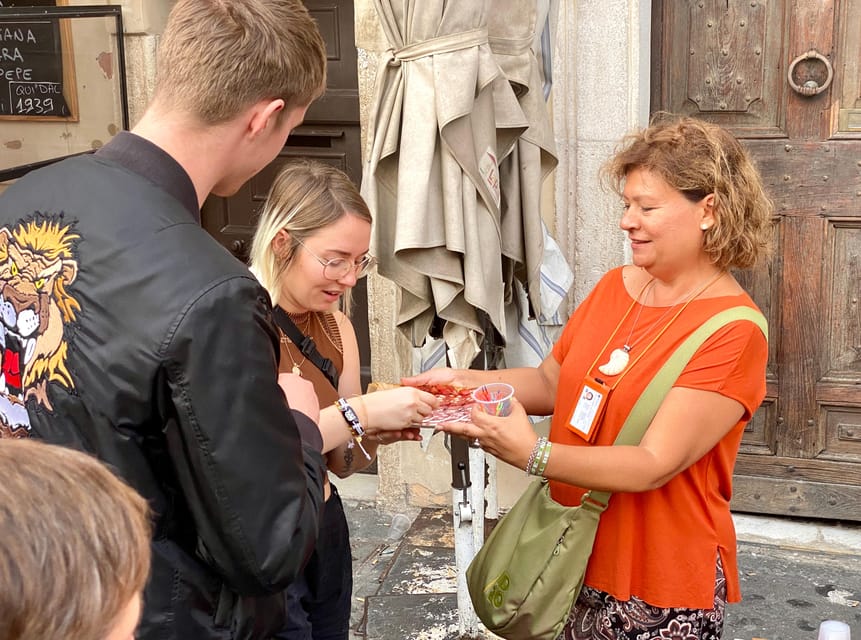
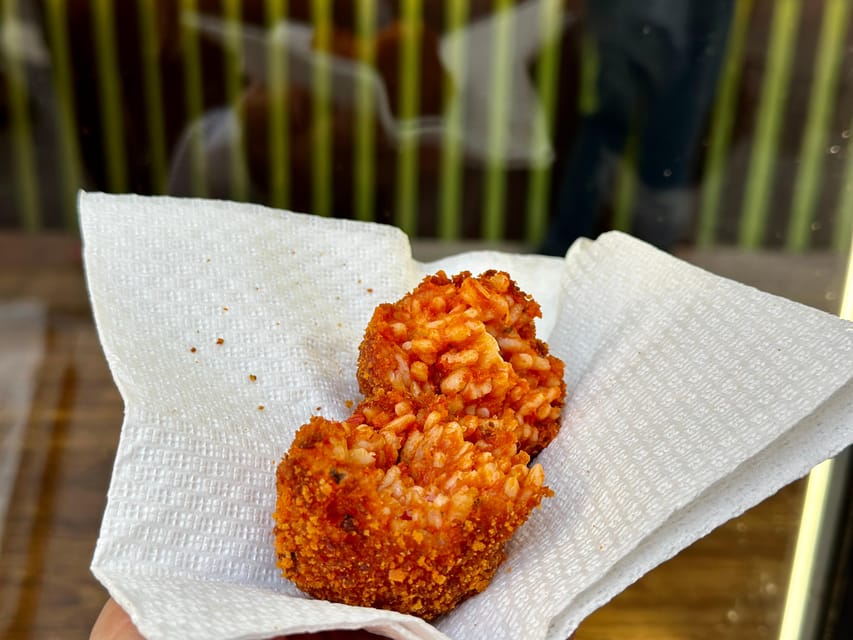
Via dei Chiavari is where the tour turns firmly toward Roman street food. Here you taste supplì, the classic deep-fried rice ball.
Supplì is a particularly useful dish to try with a guide because it may not be the first Roman specialty you order on your own. It is crisp outside, warm inside, and built around rice. Your guide explains what makes it part of Roman food culture and how locals treat it as a quick, satisfying bite.
This is also a good point to think about the tour’s pace. You are not sitting down for a long restaurant meal. You stop, taste, listen, and walk again. The rhythm keeps the experience active, but it means you should not expect a table, cutlery, or guaranteed seating at each stop.
Families can enjoy the format, especially if children are willing to try unfamiliar foods. One guide made a point of including both adults and children in questions and explanations. Still, parents should know that the tour involves steady standing and walking rather than relaxed seated breaks.
Same place, a different plate:
- Rome: Trastevere Street Food Walking Tour with Local Expert
★ 4.8 · 1,784 reviews - Roman Food Tour with Visit to the Trionfale Food Market
★ 5.0 · 471 reviews - Trastevere & Campo de’ Fiori Street Food Tour, Eat Like a Local
★ 5.0 · 207 reviews - Hidden Rome: Small Group E-Bike Tour with Street Food Stops
★ 5.0 · 169 reviews
Entering Rome’s Jewish Ghetto
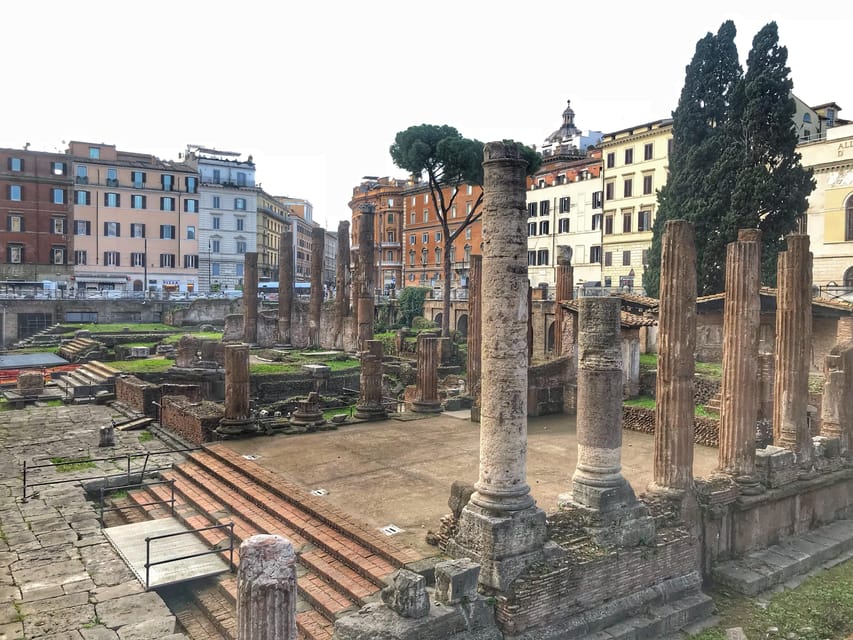
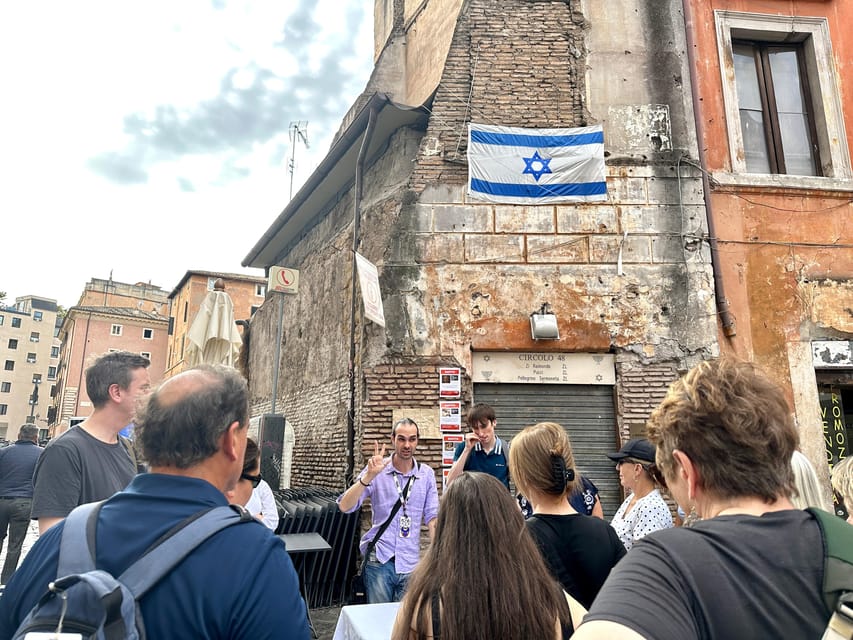
The Jewish Ghetto is the cultural heart of the second half of the route. It is one of the oldest Jewish quarters in the western world, and your guide introduces the food traditions connected to Rome’s Jewish community.
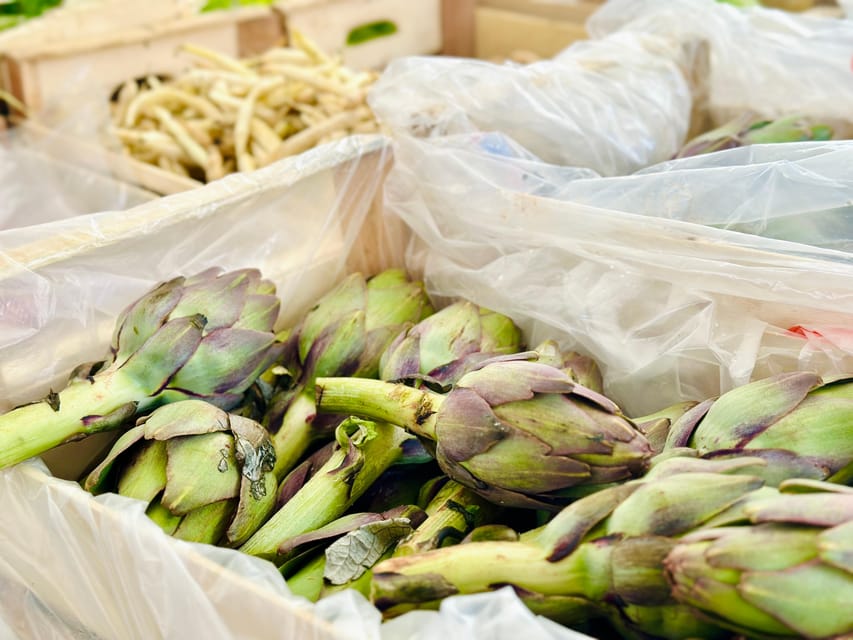
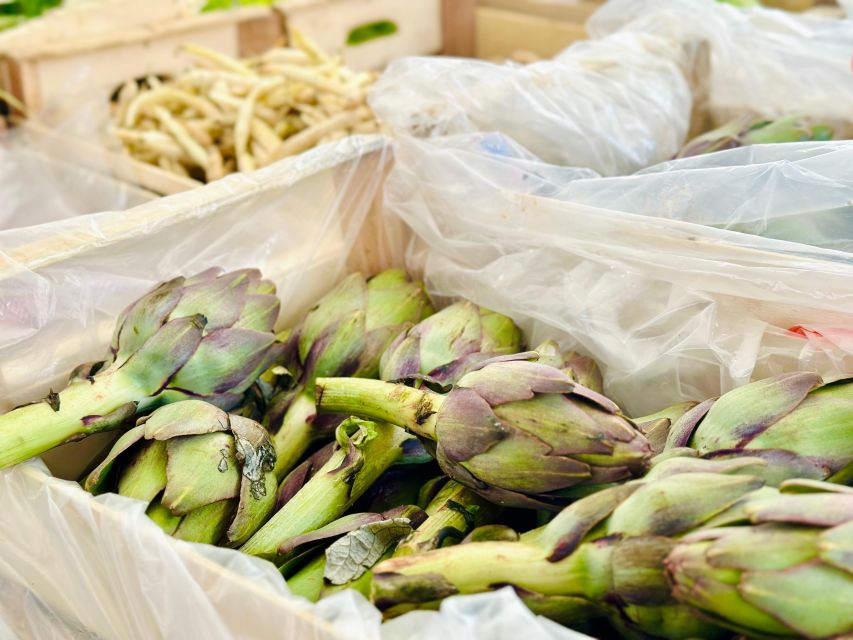
The signature tasting here is the fried artichoke. It is known for its crisp texture and distinctive flavor, and it gives you a clear example of how local cooking traditions can become part of Rome’s wider street-food identity.
I like this stop because it adds a different voice to the tour. You are not simply moving from one Italian snack to another. You are learning how a community’s food customs became part of the city’s everyday eating culture.
There is one fair limitation. The Jewish Ghetto has one main food tasting stop in the published route, not a long series of tastings. If you want a full food tour devoted only to Jewish Roman cooking, this experience may feel too broad. If you want a compact introduction combined with sightseeing, the balance works better.
The neighborhood also deserves your attention between bites. Let your guide point out the connections between food, faith, local customs, and the streets around you. The best part of this section may be the explanation that accompanies the artichoke, not simply the artichoke itself.
Finishing with gelato at Largo Argentina
The tour ends at Largo di Torre Argentina, also called Area Sacra di Largo Argentina. The site is known for its ancient ruins, which give the final section a strong historical setting.
After the savory food, you finish with gelato. It is a sensible ending, especially after pizza, cured meats, supplì, and fried artichoke. The gelato also provides a cooler, sweeter pause before you continue sightseeing or make your way to your next stop.
The endpoint is useful for planning the rest of your day. You do not return to Campo de’ Fiori, so arrange your afternoon from Largo Argentina rather than assuming you will finish where you began. The tour’s final location also makes it easy to continue exploring central Rome on foot, although no additional route is provided as part of the experience.
How much food do you really get for $41?
At $41 per person, this tour offers solid value if you treat it as both lunch and a guided walk. You receive five food stops, a wine sample, a beer sample, and two and a half hours of local commentary. Several people finished feeling full enough to continue until dinner.
The value is strongest for first-time visitors who want help choosing Roman specialties. You could spend less by buying individual snacks yourself, but you would lose the explanations, the planned route, and the chance to connect each dish with its neighborhood.
The tour also compares well with more expensive food tours. One participant specifically considered it good value beside similar experiences costing twice as much. I would still avoid booking it solely for quantity. The real benefit is the combination of tastings and context.
Drinks beyond the included sips cost extra. If you need a full drink at every stop, your final cost will rise. The tour is best viewed as a generous tasting walk, not a formal meal with unlimited beverages.
Guides who make the route work
The strongest praise goes to the guides. Francesca has been described as friendly, accommodating, and clear when explaining food. Ramona was praised for her personal stories, local history, and care with the group. Mattia received strong marks for explaining both the city and the food.
Barbara was noted for her joyful manner and strong understanding of the area. Arianna kept the group comfortable in hot weather by choosing shade where possible. These details matter because the route includes outdoor walking, standing, and cobbled streets.
Guide quality can shape this experience more than any single food stop. A plain tasting becomes much more memorable when you understand why the dish matters. The tour also sometimes feels personal rather than crowded. One couple arrived 10 minutes late because of train delays and found that Ramona was still waiting. Their group ended up being just the two of them.
You should not count on a private tour, but smaller numbers can happen. Either way, expect an English-language tour with a live local guide.
Walking, weather, and dietary limits
The route is generally flat, which makes it easier than a hillier Rome walking tour. However, flat does not mean effortless. Cobblestones can be uneven, and the tour is not suitable for wheelchair users or people with limited standing or walking capacity.
Seats are not guaranteed. Wear comfortable shoes, and plan for a standing meal spread across several stops. In hot weather, the guide may route you through shade when possible, but the tour remains outdoors for much of its duration.
Food restrictions need careful planning. Vegetarian food can be provided only when requested in advance. Vegan, gluten-free, and dairy-free options are not available, and people with nut allergies should understand that cross contamination is possible.
Pets are not allowed. The tour is conducted in English, so you will get the most from it if you are comfortable following spoken explanations while walking through busy streets.
Who will enjoy this Rome food walk?
I would recommend it to first-time visitors who want a friendly introduction to Roman food without giving up sightseeing. It suits couples, families with older children, and people who prefer tasting several specialties instead of committing to one long restaurant meal.
It is also a good choice if you want practical food advice for the rest of your trip. The guides share tips about Italian eating habits and what to expect when tasting food in Rome. That kind of advice can help you order with more confidence later.
Food-focused visitors should book it if they like a broad sample of Roman cooking. History-minded visitors will also find enough context in Campo de’ Fiori, the Jewish Ghetto, the old passageway, and Largo Argentina.
I would look elsewhere if you need a seated meal, a wheelchair-accessible route, a vegan menu, or an in-depth Jewish Ghetto food program. You may also want a different experience if your priority is a large market visit, since afternoon departures may take place after the stalls have gone.
Should you book this tour?
Book it if you want a filling, well-priced introduction to Roman street food tied to real neighborhoods and local stories. The combination of pizza, cured meat, supplì, fried artichoke, gelato, wine, and beer gives you a broad sample in a short time.
Skip it if dietary limits make the menu unsuitable or if you need frequent seating. For most able-bodied visitors who enjoy walking and trying unfamiliar dishes, this is a practical way to spend half a day in central Rome, especially when you choose a morning start for the best chance of seeing Campo de’ Fiori’s market.
FAQ
Where does the Rome street food tour begin?
It begins under the statue of Giordano Bruno in the middle of Campo de’ Fiori square.
Where does the tour finish?
The tour finishes at Area Sacra di Largo Argentina, also called Largo di Torre Argentina.
How long does the experience last?
The walking food tour lasts 2.5 hours.
What food is included?
The route includes five food stops with specialties such as Roman pizza, artisanal cured meat, supplì, fried artichoke, and gelato.
Are drinks included?
One sample of beer and one sample of wine are included. Other drinks are not included.
Is there a vegetarian option?
Yes, but it must be requested in advance.
Are vegan, gluten-free, or dairy-free options available?
No. Vegan, gluten-free, and dairy-free options are not available.
Is the tour suitable for wheelchair users?
No. The experience is not suitable for wheelchair users or people with limited walking or standing capacity.
Is the tour conducted in English?
Yes. The experience includes a live English-speaking local guide.
Just added around Rome
- Testaccio Street Food Tour Eat Like a Local★ 3.5 · 2 reviews
- Vegan Street Food Tour in Rome★ 5.0 · 6 reviews
- Tasty Trastevere Street Food Tour in Rome from Tiberine Island to Ponte Sisto★ 5.0 · 25 reviews
- Tasty Rome Street Food Tour around Campo de’ Fiori Market & Jewish Ghetto★ 5.0 · 2 reviews
- Vatican Street Food Tour and Wine Experience with Local Guide★ 5.0 · 7 reviews
- Gems of Rome: Small group E-bike tour with street food stops★ 5.0 · 36 reviews
- Rome Trastevere Street Food Tour: Eat and Drink Like a Local★ 5.0 · 35 reviews
- Campo de’ Fiori & Jewish Ghetto Rome Street Food & Walking Tour★ 5.0 · 5 reviews
Street Food Tours, compared.
Old Town, Creek, Museums, Souks, & Street Food Tour
What we made of it →
Ho Chi Minh City Street Food Tour & Sightseeing By Motorbike
What we made of it →
Comuna 13 Graffiti Tour, Cable Car & Street Food
What we made of it →
Old Town, Souks, Street Food, Guided Tour & Abra Ride
What we made of it →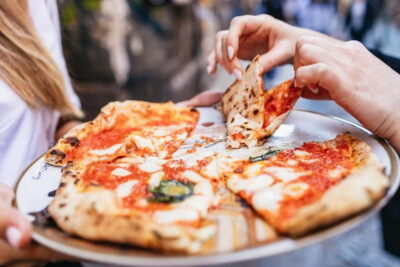
Small Group Hanoi Street Food Tour with a Real Foodie
What we made of it →
Saigon By Night and Street Food By Motorbike | Opt: Ao Dai Riders
What we made of it →Where this tour turns up