
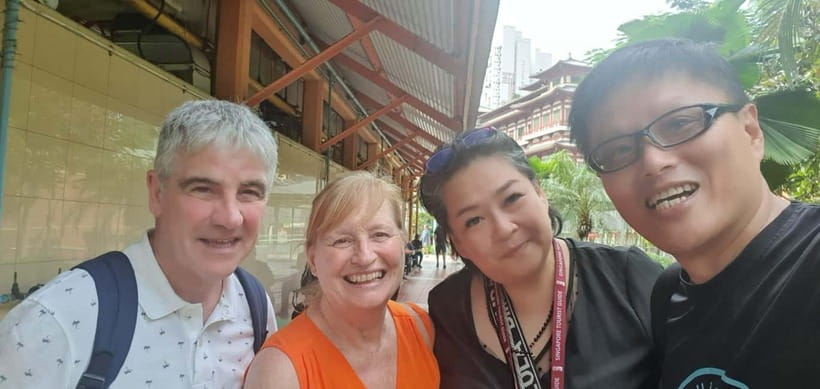
Review · SINGAPORE
Chinatown Heritage Walk & Street Food Tasting (Small Group)
Follow your nose through Chinatown. This 150-minute walk pairs seven to eight local food and drink tastings with stories about Singapore’s Chinese, Malay, Indian, and Peranakan influences. I like that the group is capped at 10 people, keeping the experience personal without the cost of a private tour.
I also like the focus on places and dishes you may not find on your own, plus the friendly guides who have earned strong praise, especially Jason and James. The main consideration is the outdoor format: Singapore’s heat, sun, and sudden rain can make the walk tiring, and the tour is not suitable for wheelchair users.
Key points to know before booking
- Start at Maxwell MRT Station: Meet near the Cheers convenience store inside the station, close to Exit 2.
- Taste 7 to 8 local items: Expect famous dishes such as Hainanese chicken rice, laksa, spring rolls, and other local specialties.
- Small group of up to 10: You get more room to ask questions and keep up with the guide.
- Plan to arrive hungry: The food is spread across the experience, and one stop may include durian.
- Guides add the real value: Jason and James are praised for their warmth, food knowledge, stories, and willingness to help with photos.
- Allow two and a half hours: The experience includes about 90 minutes of guided Chinatown touring and about an hour devoted to food tasting.
Why this Chinatown food walk works well
Singapore is easy to admire from a distance. The clean streets, impressive towers, and efficient transport system make a strong first impression. But food gives you a better sense of how the city’s cultures meet in everyday life.
This experience uses Chinatown as both a neighborhood to explore and a dining room without walls. You walk through local streets, stop for food, and hear how dishes connect with Singapore’s Chinese, Malay, Indian, and Peranakan communities. That combination matters because you are not simply eating a list of famous foods. You are learning why those foods belong in Singapore.
I like the balance. The tour gives you enough walking to understand the area, but it does not turn into a long history lecture. It also gives you enough food to make the $51 price meaningful, especially if several of the dishes are unfamiliar to you.
The small group limit of 10 is another advantage. Food stops can feel awkward in a large crowd, particularly when a guide is explaining ingredients or showing you how a dish is served. A smaller group makes it easier to hear, ask questions, and keep the pace comfortable.
More Chinatown Food Tours in Singapore:
- Singapore: Chinatown Hawker Food Tasting Tour
★ 5.0 · 96 reviews - Michelin Premium Food Tour with Hawker Centre & Chinatown Tour
★ 4.5 · 50 reviews - UNESCO Hawker Culture: Chinatown Food Tasting Tour
★ 5.0 · 47 reviews
Meeting Jason or James at Maxwell MRT Station
The meeting point is near the Cheers convenience store inside Maxwell train station, close to Exit 2. That is a practical starting place because you can arrive by MRT and avoid spending extra money on a taxi or private transfer.
Give yourself a little extra time to find the correct part of the station. The instructions are specific, but stations can be confusing when you are carrying bags or arriving during a busy period. The tour does not include transport, so you are responsible for reaching Maxwell MRT Station and returning from there.
The guides named in the feedback are Jason and James. Jason receives particular praise for being warm, patient, and willing to take photos at the main sights. That small service can matter more than it sounds. You can pay attention to the guide and the neighborhood instead of trying to set up a timer or ask strangers for a picture.
Jason is also described as flexible when the group wanted to stop for durian or ask extra questions about Singaporean life. James is praised for adding amusing stories about food, culture, and the way people in Singapore think. Stories may be informal rather than academic, but that can make the walk more memorable.
The first 90 minutes: Chinatown through food and memory
The opening part of the experience is a guided walk through Chinatown. This is where the tour earns its cultural side of the bargain.
You can expect to see important Chinatown sights while learning how food and local life developed in the area. The description does not give a fixed list of every building or street, so the exact route may vary. That is useful if you prefer a guided introduction rather than a rigid checklist of monuments.
The walk connects the visible neighborhood with the food you later taste. Chinatown is not presented as a museum frozen in time. Instead, the guide helps you understand how older traditions continue in shops, markets, food centers, and daily routines.
I find this approach more useful than a tour that simply points at old buildings. When the guide explains a dish, you have context for its ingredients and place in local culture. When you pass a food stall or market, you can better understand why it matters to people who live in the city.
The route also seems suited to a first visit. One person used the information from the tour to return and explore Chinatown independently. That is a good sign for anyone with only a short stay in Singapore, because the walk can help you decide where to spend more time later.
The possible downside is the weather. You will be outside for much of the experience, and Singapore can be hot, humid, and wet. Bring a sun hat, sunscreen, and an umbrella, as recommended. Comfortable shoes are sensible, although specific footwear requirements are not provided.
Maxwell and the food tasting hour
The food portion includes seven to eight local food and drink tastings. The exact selection can change, but the advertised examples include Hainanese chicken rice, laksa, spring rolls, and colorful traditional local treats.
Hainanese chicken rice is a good introduction to Singapore’s food culture because it looks simple but depends on careful preparation. The dish usually centers on chicken, seasoned rice, and accompanying sauces. Here, the point is not just to fill up. You get a chance to connect a familiar-looking plate with Singapore’s wider culinary story.
Laksa offers a different experience. It brings spice, fragrance, and a stronger mix of influences to the table. If you are cautious with spicy food, ask the guide what to expect before tasting. The information provided does not promise a specific spice level or allow every dietary request, so you should explain your needs clearly at the start.
Spring rolls and traditional local sweets or snacks add variety. That variety is important. A food walk is more satisfying when the dishes do not all have the same texture or flavor, and these samples give you a quick look at both everyday staples and more distinctive local tastes.
Durian may also enter the picture. One guide was happy to accommodate a request for a durian stop, and the advice is simple: do not skip it if you are willing to try something unusual. Durian has a strong smell and a creamy texture, so it is not a safe bet for every palate. Still, it is one of the more memorable ways to make the tasting feel connected to Singapore rather than interchangeable with any Asian food tour.
The food is served as tasting portions, not as a formal restaurant meal. You should arrive hungry, but do not assume that every item will suit you. The tour includes snacks and tastings, while personal expenses are separate, so any extra food or drinks you buy are your responsibility.
More History Walks in Singapore:
- Street Food, Cultural & Historical Tour of 3 Ethnic Quarters
★ 5.0 · 23 reviews - Chinatown Heritage and Local Street Food Small Group Tour
★ 5.0 · 10 reviews - Palermo: Street Food and History Walking Tour
★ 4.9 · 1,486 reviews - Lecce History and Street Food Tasting Small Group Tour
★ 5.0 · 288 reviews
What the food tells you about Singapore
The strongest part of this experience is the link between eating and identity. Singapore’s food culture draws from Chinese, Malay, Indian, and Peranakan traditions. You get to sample that mixture in a compact area rather than spending several days trying to work out where to begin.
A guide can also explain the difference between eating at a food center and ordering in a restaurant, though the exact details depend on the route and conversation. That kind of practical context helps you make better choices later in your trip.
I especially value the chance to ask questions while eating. You can find a list of Singapore’s famous dishes online, but a guide can tell you what a food means locally, how it is commonly enjoyed, or why a dish may look different from one stall to the next.
The experience also gives you a useful introduction to hawker culture. The supplied details do not promise a formal lesson about licensing, stall ownership, or food regulations, so I would not book it expecting a technical seminar. Instead, think of it as a friendly, food-based explanation of how Singapore eats.
The guides are central to the experience
The guide makes a major difference here. A basic food tour can become a series of hurried purchases and quick explanations. A warm guide turns those same stops into a conversation.
Jason is repeatedly praised for his friendliness, patience, and care. He helped with photos, answered questions about history and lifestyle, and made time for a durian stop when requested. That suggests you will get the most from this experience if you engage with the guide rather than treating the walk as a simple tasting menu.
James receives similar praise for his stories and easy manner. His comments about food and Singaporean thinking were described as funny, with the useful warning that informal stories should be enjoyed as conversation rather than treated as official history.
The guide can also help with dietary needs. A vegan and a vegetarian in one group were accommodated especially well. That is encouraging, but I would still state your restrictions clearly when you meet. The tour promises food tastings, not a published vegan or vegetarian menu, so flexibility may be needed.
Is $51 a fair price?
At $51 per person, this is not the cheapest way to eat in Singapore. You could certainly buy individual hawker dishes for less. But that comparison misses the service included in the price.
You are paying for a live English-speaking guide, a planned route, seven to eight tastings, cultural explanation, and the convenience of knowing where to go. If you are new to Singapore or have just two days in town, that structure can save time and reduce the risk of wandering past good food without recognizing it.
The value is strongest for first-time visitors who want a clear introduction. It is also good for anyone who enjoys trying several dishes but does not want to order full portions at multiple stalls.
The value is weaker if you already know Chinatown well, speak confidently with food-stall sellers, and prefer to choose every dish yourself. You may spend less by exploring independently. The tour also does not include transport or personal expenses, so remember that the $51 covers the planned experience rather than every cost connected with your outing.
Who should book this experience?
I would suggest this tour to you if you:
- Have limited time in Singapore and want a quick introduction to Chinatown
- Enjoy trying small portions of several foods
- Want cultural context along with your meal
- Prefer a group capped at 10 people
- Like asking a guide questions about local life
- Are open to unusual foods such as durian
- Need help finding food spots beyond the most obvious tourist choices
It may not suit you if you want a quiet, seated meal, dislike outdoor walking, or have strict dietary requirements that need a guaranteed menu. The tour is also not suitable for wheelchair users, and people over 95 are specifically excluded.
The weather deserves honest attention. A sun hat, sunscreen, and umbrella are listed as essential items, and you should take that advice seriously. The 150-minute duration is manageable, but heat and humidity can make a short walk feel longer.
Cancellation, timing, and practical details
The full experience lasts 150 minutes. The guided Chinatown portion is listed at about 1.5 hours, followed by roughly one hour of street food and drink tasting, with the tour returning to Maxwell MRT Station.
You can cancel up to 24 hours before the start time for a full refund. You can also reserve now and pay later, which helps if your Singapore schedule is still changing. Starting times vary, so check availability before you commit to a particular day.
The tour is conducted in English. Since the group is small, arrive ready to walk, listen, taste, and ask questions. If you are vegetarian or vegan, tell the guide early. If you are unsure about spicy food, durian, or any ingredient, ask before taking a bite.
Should you book the Chinatown Heritage Walk?
Yes, if you want a friendly first look at Chinatown that combines local food with useful cultural context. The strongest reasons to book are the small group, the range of tastings, and the guides’ personal touch, especially Jason’s help with photos, questions, and special requests.
I would skip it if you already have a detailed Chinatown food plan or would rather spend $51 on a larger number of full meals. For most first-time visitors, though, the tour offers a sensible way to get your bearings, taste several signature foods, and leave with ideas for where to eat next.
FAQ
Where does the Chinatown Heritage Walk start?
It starts near the Cheers convenience store inside Maxwell MRT Station, close to Exit 2.
How long does the experience last?
The experience lasts 150 minutes, or two and a half hours.
How many food and drink tastings are included?
Seven to eight local food and drink tastings are included, along with snacks.
Is transport included?
No. Transport is not included, so you need to reach Maxwell MRT Station and manage any personal transport costs yourself.
What language is the tour conducted in?
The live tour guide conducts the experience in English.
Can I cancel for a full refund?
Yes. You can cancel up to 24 hours in advance for a full refund.
Just added around Singapore
- UNESCO Hawker Culture: Chinatown Food Tasting Tour★ 4.9 · 43 reviews
- UNESCO Hawker Culture: Chinatown Food Tasting Tour★ 5.0 · 47 reviews
- Singapore Street Food Join-In Tour★ 5.0 · 2 reviews
- Singapore Street Food and Ethnic Quarters Kick Scooter Tour★ 5.0 · 8 reviews
- Signature Urban Night Tour: Sunset Street Food in Singapore★ 5.0 · 4 reviews
- Singapore Nightlife: Street Food, Night Views and Drinks★ 5.0 · 19 reviews
- Singapore Chinatown Local Hawker Food Tour★ 5.0 · 2 reviews
- Singapore: Little India Hawker Food Tasting Tour★ 5.0 · 21 reviews
Chinatown Food Tours, compared.
Bangkok Tuk-Tuk Tour by Night with Chinatown Street Food Meal
What we made of it →
Bangkok Tuk-Tuk by Night with Chinatown Street Food Meal
What we made of it →
Chinatown Food Tour with Michelin Food Stalls
What we made of it →
Night Street Food Tour of Bangkok’s Chinatown
What we made of it →
Sydney’s Chinatown Street Food and Stories Walking Tour
What we made of it →
Bangkok Hidden Gems: Talad Noi, Chinatown & Street Food Tour
What we made of it →
Michelin Premium Food Tour with Hawker Centre & Chinatown Tour
What we made of it →Where this tour turns up