
Review · INDONESIA
Jakarta: Private Guided Sightseeing & Street Food Night Tour
Jakarta comes alive after dark. This private four-and-a-half-hour outing combines glowing monuments, colonial corners, harbor views, and local food in a way that gives you a useful first look at Java’s huge capital. I especially like the flexible itinerary and the chance to eat in places you might not find alone. The main drawback is that food beyond the included martabak costs extra, and heavy traffic or rain can shorten time at some stops.
You ride in a private air-conditioned vehicle with an English-speaking local host, so the evening feels personal rather than scripted. Guides such as Gus, Thomas, Mey, Augurius, Isabel, and Tashia have earned praise for adjusting the route and answering questions about Indonesian history, religion, daily life, coffee, and food. At $52 per person, it is good value for a short stay, though it works best if you want an overview rather than long visits inside attractions.
Key points to know before booking
- Four and a half hours of Jakarta after dark: See central monuments, Old Town, Sunda Kelapa Harbor, and Chinatown in one private outing.
- Martabak is included: Try Jakarta-style pancake with chocolate and cheese, plus the savory egg version called martabak telur if available.
- The route can change: Your guide may adjust stops for traffic, weather, closures, and your own interests.
- Private transport matters: Jakarta traffic can be intense, with scooters slipping between cars. A dedicated driver saves time and stress.
- Street food is mostly pay-as-you-go: Bottled water and one pancake tasting are included, but other food and drinks are personal expenses.
- Excellent overall feedback: The experience has a 4.8 rating from 99 reviews, and 96 percent of transport ratings are perfect.
Why this private Jakarta night tour works
Jakarta can feel overwhelming at first. It is spread out, traffic is serious, and the best sights are separated by busy roads rather than gathered in one walkable center. This tour solves part of that problem by using a private car and putting a local host beside you.
You are not simply driven past a list of monuments. The guide can explain what you are seeing, answer questions, and change the order when traffic or rain gets in the way. Sue’s evening included thunder, lightning, and heavy rain, but the guide and driver rearranged the route and provided umbrellas. That kind of flexibility matters in Jakarta.
The trip also gives you several different views of the city. You see the polished central district, the political heart around Independence Square, religious landmarks, Dutch colonial buildings, an old working port, a food street, and New Chinatown. None of these stops is treated as a full museum visit. Instead, the experience gives you a broad picture in limited time.
That makes it especially useful on a short stopover. Frank booked at short notice and found that Thomas offered a good mix of historical background and current issues. Other guests with only 24 to 48 hours in Jakarta used the tour to get their bearings before planning the rest of their stay.
More Evening and Night Food Tours in Indonesia:
- Denpasar: Night Street Food Walking Tour
★ 4.5 · 60 reviews - Yogyakarta Night Street Food Hunting
★ 5.0 · 3 reviews - Night Street Food and Cultural Walking Tour
★ 4.3 · 3 reviews
The Welcome Statue and Jakarta’s bright central core
The evening begins with hotel pickup in the Jakarta city area. Your guide waits in the lobby about 10 minutes before the agreed time, then you set off in a private, air-conditioned vehicle.
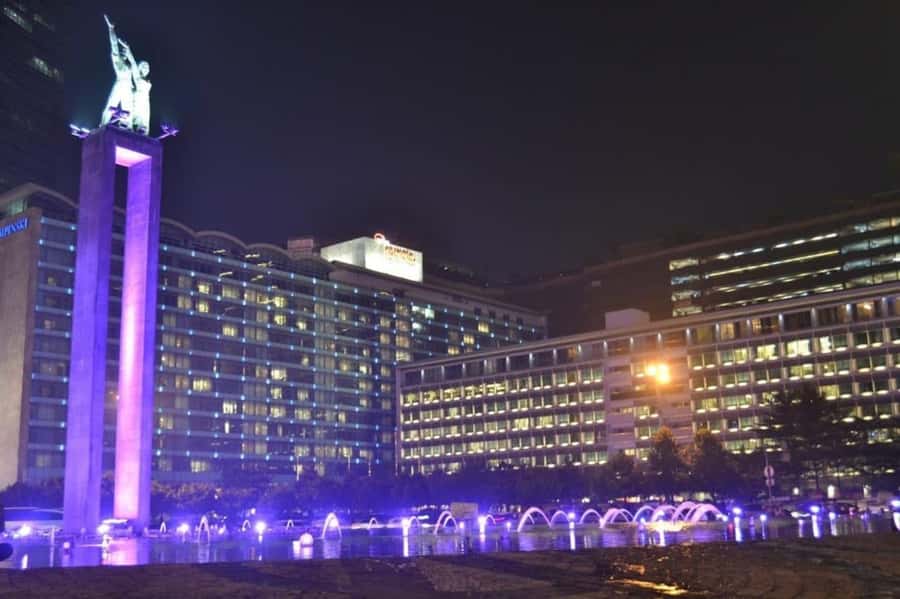
The first stop is the Welcome Statue at the center of the Hotel Indonesia traffic circle. The statue sits beside a water fountain and is one of the recognizable symbols of central Jakarta. At night, the surrounding buildings and roads take on a different character, with lights reflecting off the city’s modern architecture.
This is a good opening stop because it introduces Jakarta’s central business area without requiring a long walk. You can get out for photographs and hear why the statue matters to the city. The exact amount of time here depends on traffic and the rest of your route, so think of it as a photo and orientation stop, not a lengthy attraction.
The night setting is a real advantage. Several people enjoyed seeing the city lit up, and Priya noted that the monuments feel particularly attractive after dark. If you like city photography, bring a phone or camera that handles low light well.
Independence Square, the Presidential Palace, and the National Monument
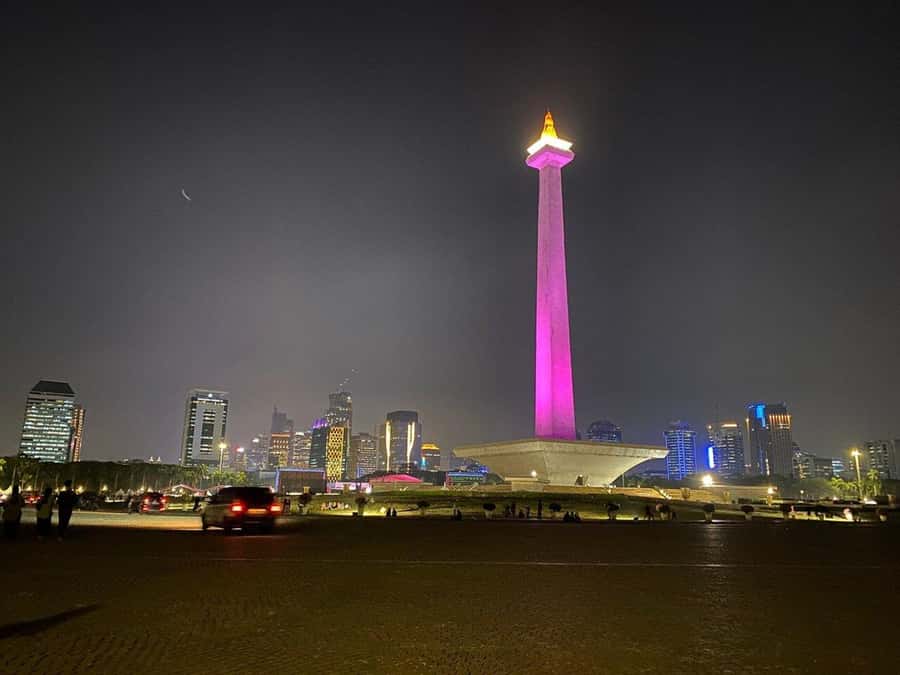
From the Welcome Statue, the car passes toward the Independence Square area, the center of Indonesia’s national government. The route includes views of the Presidential Palace and the Arjuna Wijaya statue, which features a chariot scene linked to Indonesian cultural symbolism.
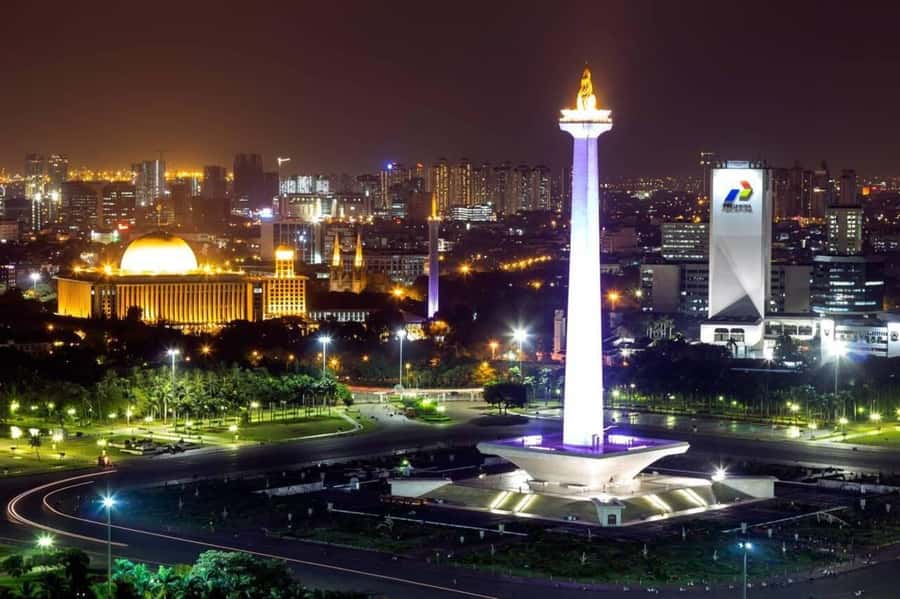
The National Monument, usually called Monas, is viewed from outside. This tall landmark is one of Jakarta’s defining sights, and it glows in changing colors at night. You do not get an interior visit or a climb as part of this experience, so set your expectations accordingly. The value is seeing the monument illuminated and hearing its place in the story of independent Indonesia.
A guide makes this part more useful than a quick drive-by. Thomas was praised for explaining the meaning of national symbols, including Garuda, Indonesia’s iconic eagle emblem. Other guides have been appreciated for linking monuments to politics, geography, and everyday life rather than offering only dates.
Traffic can affect this section. Jakarta roads may slow the car, and a temporary closure could require a change of order. That is one reason the private format helps. Your guide can spend more or less time at a stop instead of holding up a large group.
Istiqlal Mosque and the Cathedral across the road
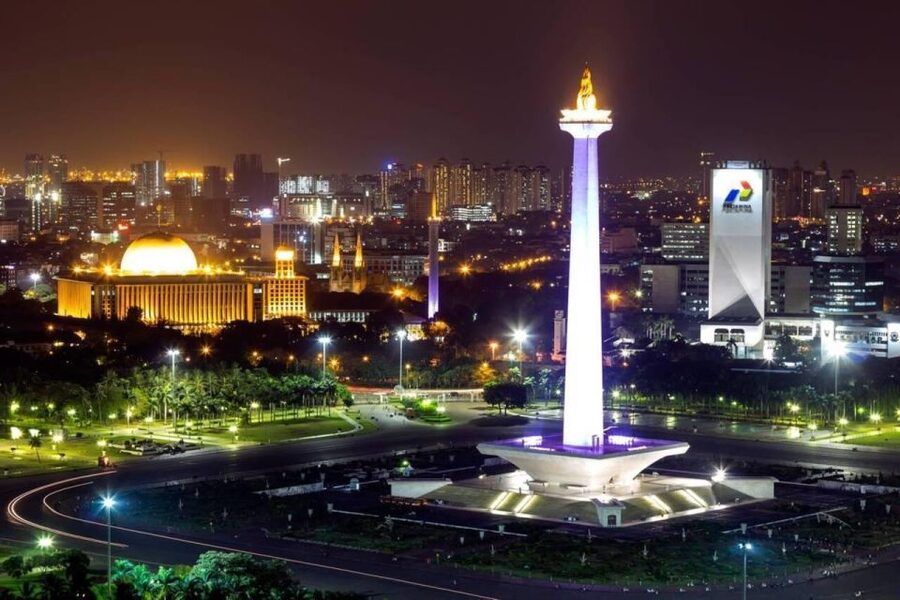
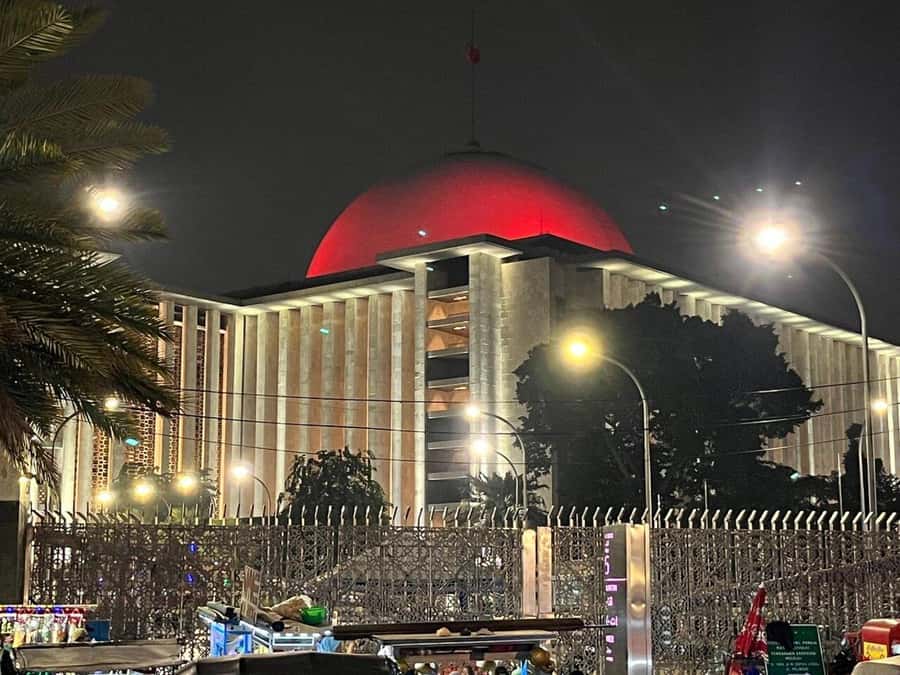
One of the most striking stops is Istiqlal Mosque, the largest mosque in Southeast Asia. The tour visits the mosque from outside, then shows you the Catholic Cathedral directly across the road.
The pairing is significant. The mosque and cathedral are often presented as a symbol of religious unity in Indonesia, a country with many faiths and traditions. Seeing both buildings together gives you a quick but memorable lesson in the country’s approach to religious diversity.
The cathedral’s European neo-Gothic design provides a sharp contrast to the mosque’s broad dome and large scale. Alexey arrived around twilight, when the mosque’s dome seemed to blend into the cloudy sky. That small detail captures why this stop works so well at night: the changing light can make the architecture feel different from one minute to the next.
This is an exterior visit, so modest clothing and respectful behavior are still wise. You should not expect a guided interior tour or a long religious program. The stop is best for architecture, photographs, and context.
More Street Food Tours in Indonesia:
- Bali: Authentic Culinary Street Food Experience Tour
★ 4.7 · 99 reviews - Ubud Traditional Night Market Food Tour-All Inclusive
★ 4.4 · 95 reviews - Night Walking Tour-Malioboro street food with guide at Yogyakarta
★ 5.0 · 53 reviews - Bali Street Food Tour
★ 5.0 · 44 reviews
Mangga Besar and the first taste of Jakarta street food
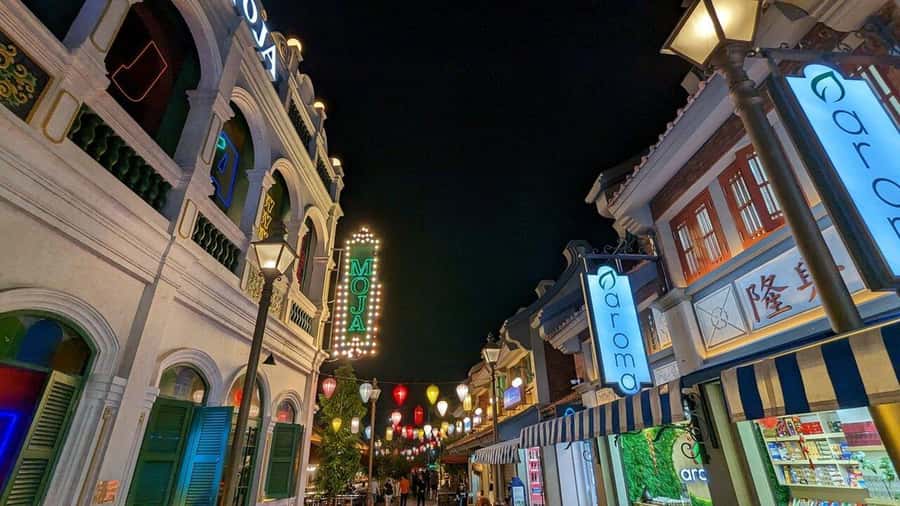
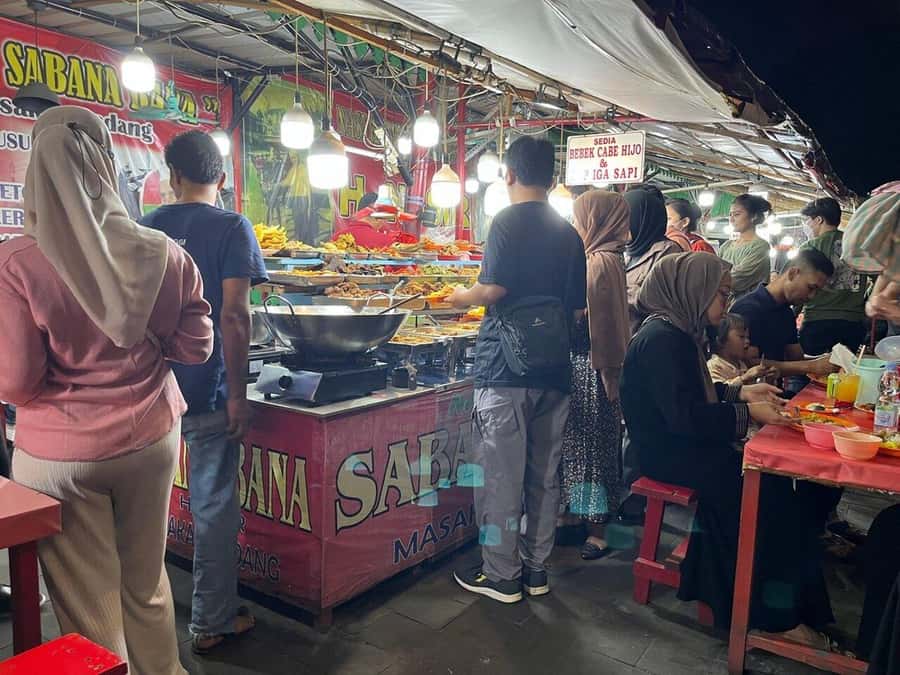
The food portion begins around Mangga Besar Street, a nighttime food area known for local stalls and vendors. This is where the outing moves from monuments to ordinary city life.
The included tasting is martabak, often described as Jakarta-style pancake. The sweet version commonly comes with chocolate and cheese, an unusual combination if you have never tried it. Several people singled it out as a favorite, and one guide also helped a visitor try the savory martabak telur, an egg-filled version.
Do not expect a tiny sample with no choices. The guides can explain what you are eating and help you decide what else suits your taste. Along the street, you may see sellers offering cobra satay and durian, known locally as the king of fruit. You can try additional dishes and drinks, but those purchases are not included in the $52 price.
That arrangement is sensible. It keeps the tour price clear while letting you choose how adventurous or cautious you want to be. If you have allergies, dietary restrictions, or a sensitive stomach, tell the guide early. Sue’s group received a gluten-free alternative, but you should treat that as something the guide may be able to arrange, not as a guaranteed menu item.
Street food is also where the private format pays off. You can pause to ask questions, skip something that looks too challenging, or choose a dish that matches your appetite. The experience is not a formal food class, but it gives you a friendly introduction to flavors and eating habits in Jakarta.
Old Town Batavia and the canal-side colonial setting
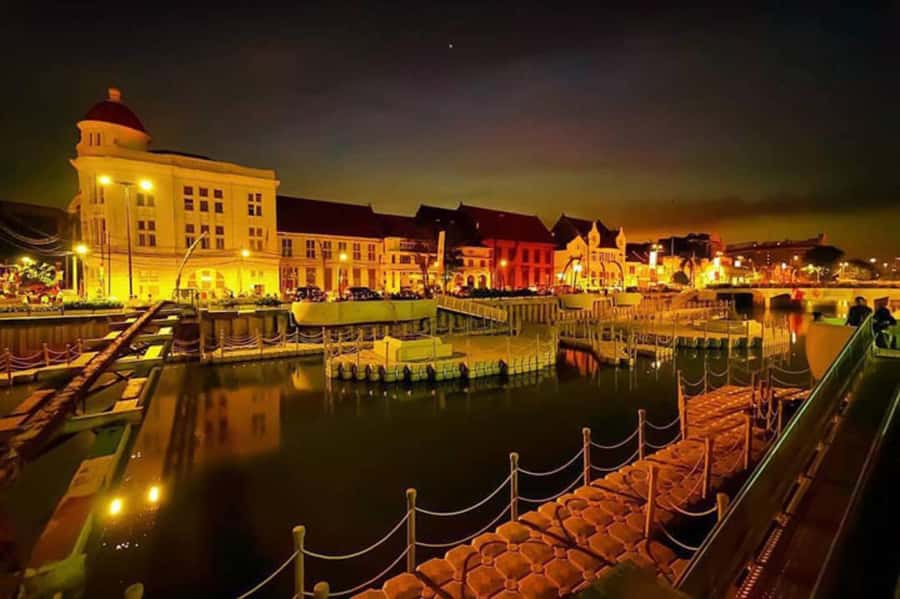
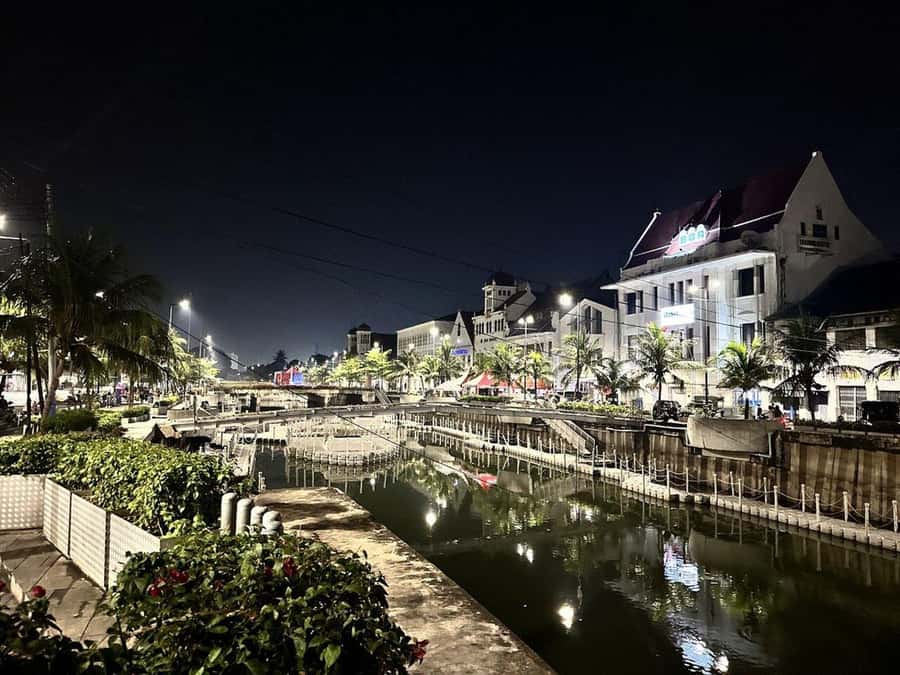
The route continues to Old Town Batavia, also called the Dutch Town. This district was once the center of Dutch colonial government, and its canal and historic buildings offer a very different view of Jakarta.
The colonial architecture is particularly atmospheric after sunset. You may see the canal reflecting nearby lights and the old facades taking on a softer appearance. The stop gives you a chance to connect Jakarta’s present-day streets with its period under Dutch rule.
Time here can vary. If traffic has been slow or weather is poor, your guide may shorten the visit. Jade enjoyed spending time at Cafe Batavia and listening to live music there, but that is not listed as a guaranteed part of the tour. You might have an opportunity to visit or stop nearby, but plan on the Old Town area itself rather than a reserved restaurant experience.
I like this part because it prevents the evening from becoming only a modern-city tour. You see the colonial past, but you also remain aware that Old Town is part of a living city rather than a preserved European-style stage set.
Sunda Kelapa Harbor and the Pinisi boats
Sunda Kelapa Harbor adds another layer to the evening. Long ago, this port was a major center of trade on Java. It still handles domestic shipping, and traditional Pinisi wooden boats line the waterfront.
For many people, this is the most unusual stop. The harbor is not just an attractive photo location. It connects Jakarta to its maritime past and to the working movement of goods around Indonesia today.
Alexey specifically valued visiting the old port because it is a place you might not reach easily on your own. That is a fair point. The harbor is less obvious than Monas or Istiqlal Mosque, and getting there without local help can be awkward in a city this large.
Do not expect a polished waterfront attraction or a long boat ride. The appeal is the view of the traditional vessels and the chance to hear how the port fits into Jakarta’s development. Wear shoes suitable for getting in and out of the vehicle, and take care around uneven public areas.
New Chinatown and a final round of food
The evening finishes in New Chinatown, another strong stop for eating and people-watching. Food vendors offer more chances to sample local dishes, snacks, and drinks, with purchases made separately.
This area rounds out the food experience nicely. Mangga Besar gives you one busy street-food setting, while Chinatown shows another side of Jakarta’s food culture. The guide can help you choose, explain ingredients, and point out dishes that suit your preferences.
You may also find that the group spends more time here if you are particularly interested in food. Since the route is flexible, tell your guide if you would rather sample another snack than rush to a monument. The tour’s private setup makes that conversation possible.
For visitors concerned about food safety, Florence found the food she tried safe and had no problems. That is encouraging, but normal care still applies. Choose food that looks freshly prepared, mention allergies clearly, and remember that you are responsible for additional purchases.
The guide and driver make the biggest difference
The strongest part of this experience is the human element. Names that appear repeatedly in the feedback include Gus, Thomas, Mey, Tashia, Augurius, Isabel, Mitchell, Rizky, and Catherine. Their styles differ, but the best guides share three useful habits: they explain rather than recite, they answer questions patiently, and they adjust the pace.
A private guide can also make Jakarta less intimidating. Mary appreciated having Jeffry answer endless questions while driver Tail handled the city traffic. Other people praised drivers such as Yusuf, Toto, Boni, Jimmy, and Bobo for safe, calm transport.
The division of roles matters. Your guide can talk with you and help at stops while the driver concentrates on the road. Jakarta’s scooters and crowded streets make this more than a comfort feature.
One four-star assessment noted that Gus was friendly but still had room to grow as a tour director. That is worth keeping in mind. Most feedback is extremely positive, but any guide-led experience can vary slightly by person. You can improve your odds by sharing your interests before pickup and asking for the kind of pace you want.
Is $52 a good value?
At $52 per person, the tour includes hotel pickup and drop-off within Jakarta, private air-conditioned transport, bottled water, an English-speaking host, and the martabak tasting. Additional food and drinks cost extra.
For one person, the price is not the cheapest way to see a few monuments. But the comparison changes if you are short on time or traveling as a small private group. You are paying for transport across a difficult city, local interpretation, flexible routing, and access to food areas that may be hard to navigate alone.
The value is strongest for first-time visitors, stopover passengers, and couples or families who prefer not to join a large group. It is less attractive if you want extended time inside museums, a full meal included in the price, or a carefully fixed schedule.
Free cancellation up to 24 hours before the start and reserve-now, pay-later booking add useful flexibility. Pickup is included only within the Jakarta city area. Airport, BSD City, and other outlying locations may require an extra fee paid directly to the guide.
Practical details for a smoother evening
The tour lasts 270 minutes, but Jakarta traffic can influence how much time you spend outside the vehicle. Keep your schedule flexible, especially during rain or busy evening periods.
The company sends guide details about 12 hours before pickup. Use that opportunity to share food preferences, mobility concerns, photography interests, and any must-see stop. The itinerary can change during the tour, so speak up if you prefer more food time, more history, or fewer stops.
This activity is not suitable for wheelchair users or babies under one year old. It is also not an indoor-only experience, so light clothing for warm weather, comfortable shoes, and a small umbrella or rain layer are sensible. Umbrellas were provided during one very wet evening, but I would still pack a compact one if you have room.
Should you book this Jakarta night tour?
Book it if you have limited time and want Jakarta explained by a local rather than viewed through a car window. The blend of Monas, Istiqlal Mosque, the cathedral, Old Town, Sunda Kelapa Harbor, Mangga Besar, and Chinatown gives you a remarkably broad introduction in one evening.
The tour is at its best when you treat it as an orientation with excellent food stops, not as a series of long attraction visits. Ask questions, accept the flexible routing, and budget extra for snacks and drinks.
Skip it if you need wheelchair access, want a fixed museum-focused schedule, or expect every meal to be included. For most first-time visitors who want history, city lights, private transport, and a taste of local life, this is a practical and unusually well-rounded way to meet Jakarta after dark.
FAQ
How long does the Jakarta night tour last?
The tour lasts 270 minutes, or four and a half hours. Starting times depend on availability.
Is hotel pickup included?
Pickup and drop-off are included for hotels in the Jakarta city area. Airport hotels, BSD City, and locations outside Jakarta may require an extra charge paid directly to the guide.
What food is included?
A Jakarta-style pancake, or martabak, is included. The sweet version features chocolate and cheese. Other food and drinks are personal expenses.
Is the tour private?
Yes. The experience uses a private group and a private air-conditioned vehicle with an English-speaking local host.
Does the tour visit the National Monument and Istiqlal Mosque?
Yes, but both are visited from the outside. The National Monument is viewed as it glows at night, and Istiqlal Mosque is seen from the exterior.
Can the itinerary change during the evening?
Yes. The guide communicates with you about the itinerary, and you can change your plans during the experience. Traffic, weather, and temporary closures may also require adjustments.
Just added around Indonesia
- Ubud: Night Market Feast with Balinese Culinary Odyssey★ 4.7 · 5 reviews
- Ubud: Gianyar Night Market Food Tour with up to 17+ Tastings★ 4.7 · 13 reviews
- Yogyakarta Night Street Food Hunting★ 5.0 · 3 reviews
- Denpasar Night Market Food Tour★ 5.0 · 4 reviews
- Taste & Explore Bali: Denpasar Street Food & Historic Sites★ 4.5 · 27 reviews
- Balinese Street Food Tour By Motorbike All You Can Eat and Drink!★ 5.0 · 5 reviews
- Bali Street Food Tour: Savor Authentic Flavors & Night Market★ 5.0 · 2 reviews
- Bali Street Food Tour★ 5.0 · 44 reviews
Evening and Night Food Tours, compared.
Saigon By Night and Street Food By Motorbike | Opt: Ao Dai Riders
What we made of it →
Private Street Food Evening Walking Tour in Ho Chi Minh City
What we made of it →
Small Group: Singapore Street Food & Night Tour with 9 tastings
What we made of it →
Tasting 8 Different Street Foods + Local Drink at Evening Time by Walking
What we made of it →
Small-Group Chiang Mai Evening Street Food Tour
What we made of it →
Bangkok Tuk-Tuk Tour by Night with Chinatown Street Food Meal
What we made of it →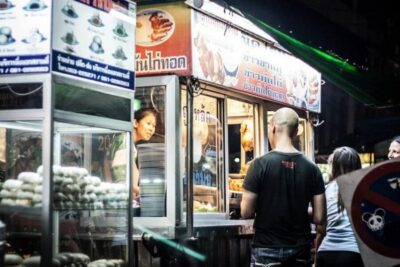
Where this tour turns up