
Review · MARRAKESH
Medina Tasting Tour: Experience Local Street Food & Culture!
Marrakech tastes better after sunset. This four-hour walk takes you from Jemaa el Fnaa into food stalls, bakeries, spice lanes, and local restaurants, with plenty to eat along the way. I like the broad mix of savory and sweet stops, and I like that the evening ends with beef tanjia or vegetarian tajine at Chez Lamine Hadj Mustapha. The main catch is simple: you need to arrive very hungry.
This is also a good first-night activity. A guide such as Youssef can help you understand the food, customs, and layout of the Medina before you explore alone. The walking is manageable but frequent, and food stops may change during Ramadan or local holidays, so you should keep a little flexibility in your plans.
What makes this Marrakech food walk worth considering
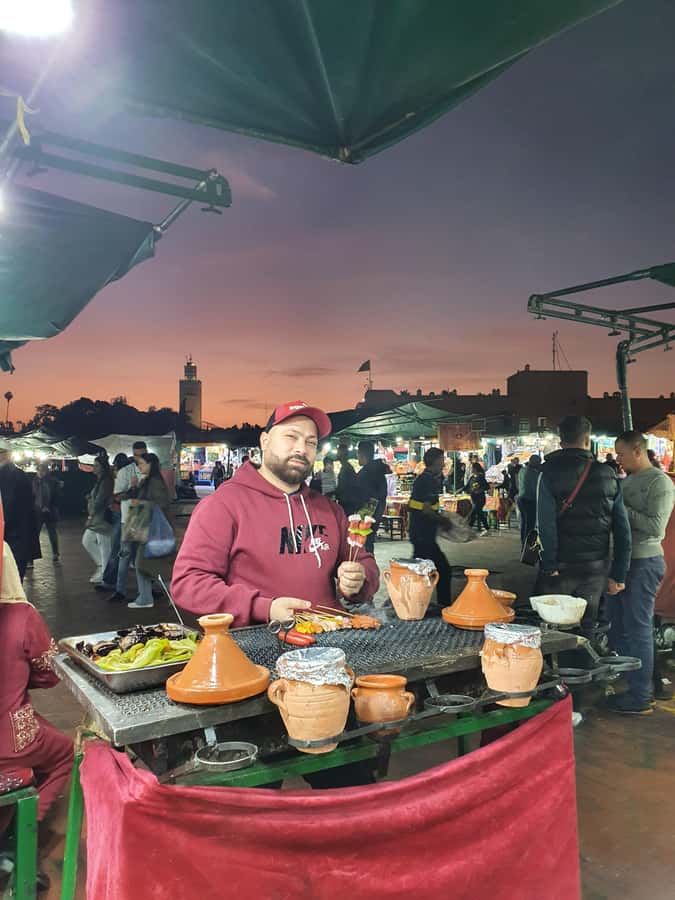
- A full four hours of tasting: You sample street food, pastries, dried fruit, nuts, fruit juice, mint tea, and a two-course meal.
- Tanjia at the end: The main meal features beef tanjia or vegetarian tajine at Chez Lamine Hadj Mustapha near Jemaa el Fnaa.
- More than a food crawl: The route includes spice and olive markets, a bakery, a local café, Souk Semmarine, and a visit to the old Rahba market.
- Useful local guidance: Your guide explains how food, Berber culture, Marrakech history, and daily life connect.
- A strong welcome to Marrakech: The tour starts and ends at the main post office facing Jemaa el Fnaa, a handy location for a first evening.
- Private tours are possible: The standard activity can also be arranged as a private group, and some departures may run even with only one person booked.
Starting at Jemaa el Fnaa after dark
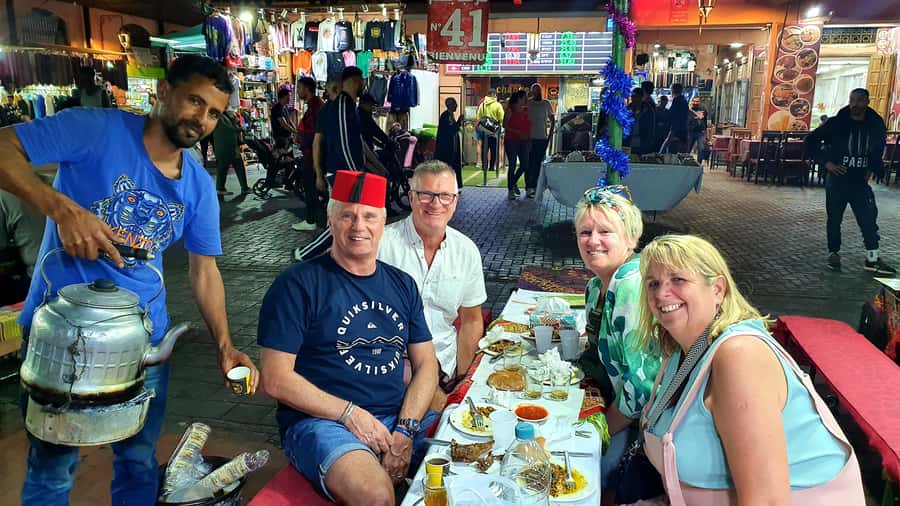
The meeting point is easy to identify: the main gate of the post office facing Jemaa el Fnaa. Look for a guide wearing the official red and green ribbon and badge. You should arrive in comfortable shoes, since this is a walking tour through the Medina rather than a sit-down tasting with short transfers.
The opening stop is Jemaa el Fnaa itself. You get a welcome refreshment, a short guided walk, street food, local snacks, and time to take photographs. The square is also a UNESCO World Heritage site, and the tour finishes nearby, giving you a chance to watch the street performers and food activity after the formal part ends.
I like this beginning because it puts the food in its proper setting. You are not tasting Moroccan dishes in an isolated restaurant. You are seeing where the evening trade happens, how the square changes at sunset, and how food fits into public life in Marrakech.
The square can be crowded and noisy. That is part of its character, but it may feel intense if you want a quiet introduction to the city. Your guide is especially useful here, helping you keep track of the group and showing you how to approach the food stalls without wasting your appetite on the first thing you see.
More Old Quarter and Medina Food Walks in Morocco:
- Taste Marrakech Street food tour from Medina
★ 5.0 · 34 reviews - Local Hidden Spots Street Food Tour in Medina Marrakech
★ 5.0 · 30 reviews - Dubai: Old Town, Creek, Museums, Souks, & Street Food Tour
★ 4.8 · 10,816 reviews
The first tastings: café, market, and bakery
After a short walk, the route stops at a local café for about 15 minutes of tasting. The exact dish is not fixed in the details provided, so you should expect a local snack rather than a set restaurant course. This is a useful early stop because it lets you try something small before the larger meal later.
The next visit takes you to a less obvious food location for around 20 minutes. Here you taste local snacks, visit a food market, and hear more about the ingredients and customs behind them. The experience may include access to a private terrace overlooking the spice market and an underground Mechoui oven, two details that give the walk a more local feel than a simple circuit of famous stalls.
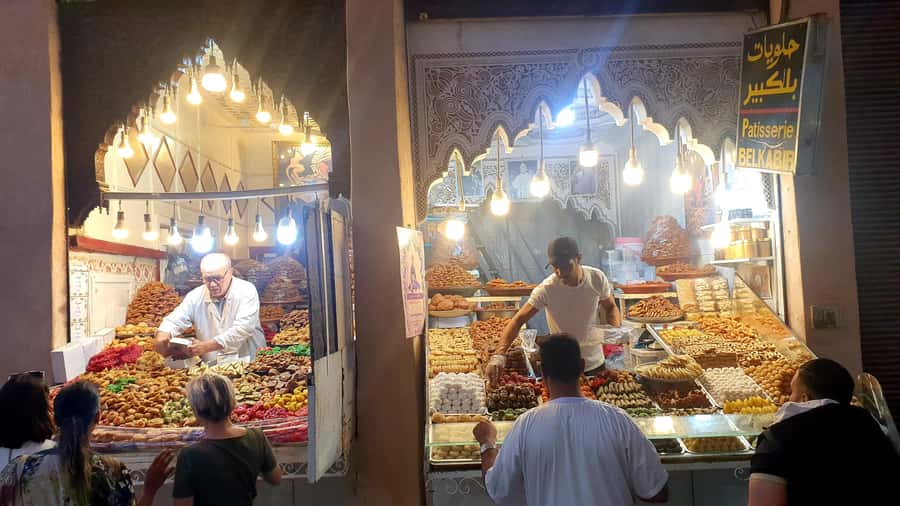
A short bakery stop follows. Moroccan bakeries are a natural part of everyday food culture, and this visit gives you a chance to sample fresh baked items rather than only prepared street dishes. You also receive Moroccan sweet and savory pastries during the wider tasting route, so the evening is not limited to one type of food.
One practical warning: bread and pastries can fill you quickly. Several people found the food generous enough that they could not finish the final meal. I suggest small bites at the early stops, even if everything looks tempting. You can always accept another taste later, but you cannot make room after a plate of tanjia arrives.
Spices, olives, and the old Rahba market
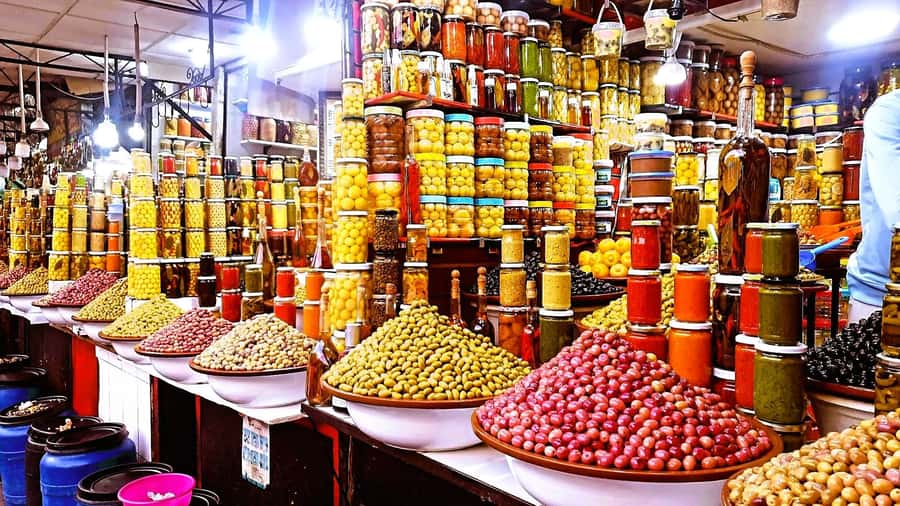
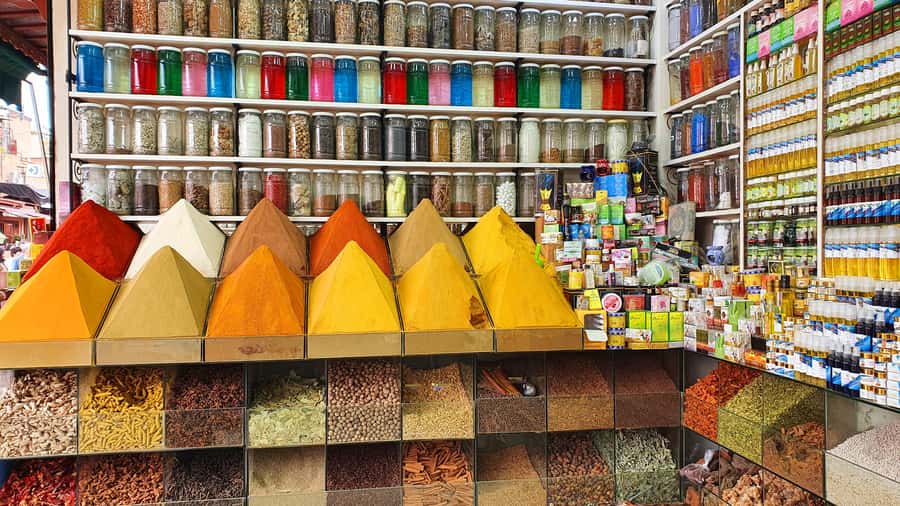
The route continues through the old Rahba market, where you have about 20 minutes for photographs, browsing, and food-market visits. This is one of the best parts for understanding how ingredients reach Moroccan kitchens. The tour also includes a spices workshop, so you are not only looking at colorful displays. You learn how different spices are used and receive simple recipes that you can try at home.
The olive market and spice lanes add an important balance to the eating. A food tour can become a string of snacks with little context. Here, the guide connects flavor to place and shows you ingredients as products sold in everyday markets.
You should not treat this as a dedicated shopping tour. The focus is tasting and learning, though there is time to look around. If a seller presses you to buy, the guide can offer practical advice and help you avoid tourist traps. That guidance has real value in the Medina, where a friendly local can make the difference between a pleasant browse and an uncomfortable sales encounter.
The tour also passes through Souk Semmarine for around 20 minutes. This is a larger souk area with food stalls and local snacks, mixed with the wider commercial life of the Medina. You might pass handicraft shops and other market activity along the way, but the stated focus remains food and local culture.
Walking between these places takes about 15 minutes at a time. The route is not an endurance test, yet you should expect uneven streets, crowds, and frequent stops. Comfortable shoes matter more than stylish shoes here.
Why the guide matters as much as the food
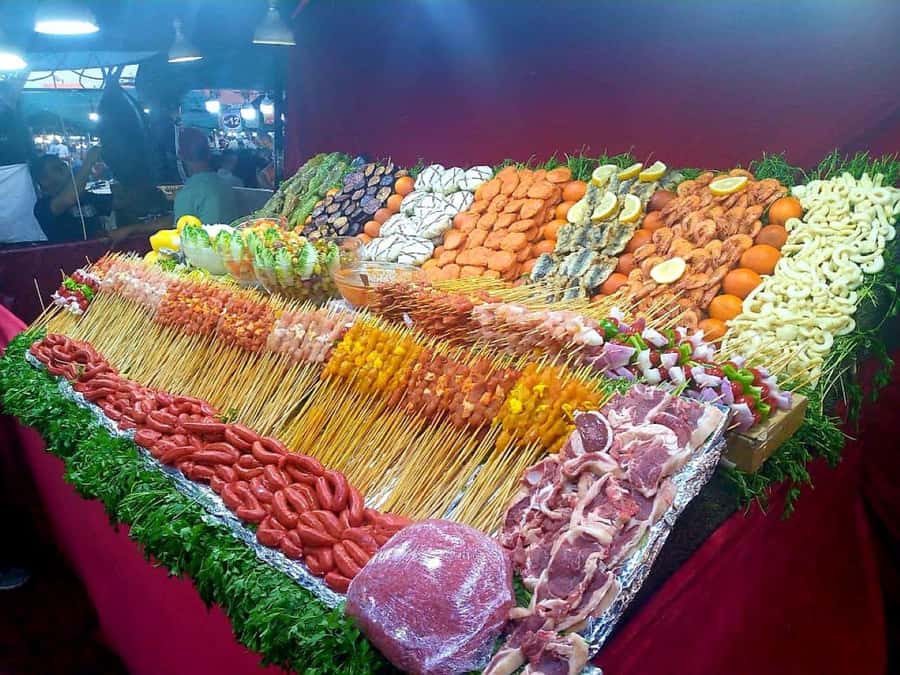
The best part of this experience is not any single snack. It is the way the guide ties the dishes to Marrakech, Morocco, and Berber culture. Youssef receives especially strong praise for his storytelling, warmth, and ability to explain history and daily life without turning the evening into a lecture.
If Youssef is leading your tour, you can expect a guide who takes time to ask about allergies, explain the background of each food, and answer questions about the city. Some bookings have operated as private tours when only one person was booked, creating a more personal evening. That is not something you should assume for every departure, but it shows that group size can sometimes be small.
The guide also helps with pacing. A good food walk requires judgment. You need enough time to taste, listen, walk, and still save room for dinner. The reported experience with Youssef is relaxed rather than rushed, with the food and conversation sharing equal billing.
The English and French options are useful, but you should select the language you are most comfortable using when booking. The experience depends heavily on explanations about food and culture, not only on putting dishes in front of you.
More Street Food Tours in Morocco:
- Marrakech: Street Food Tour with a Local Guide
★ 4.9 · 3,119 reviews - Marrakech: Street Food Tour by Night
★ 4.8 · 2,838 reviews - The Original Marrakech Street Food Tour
★ 5.0 · 248 reviews - Marrakech Street Food Tour
★ 5.0 · 220 reviews
The main meal: harira, tanjia, or vegetarian tajine
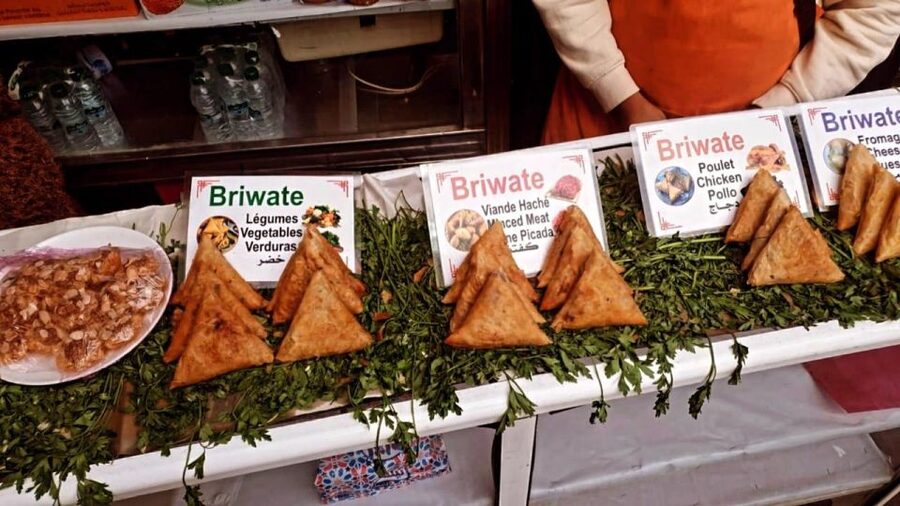
The evening’s formal food section includes a two-course dinner. The starter is harira soup at Jemaa el Fnaa. Harira is a Moroccan soup commonly associated with comfort and nourishment, and having it in the square keeps the meal tied to the setting rather than moving you away from the Medina.
The main course comes at Chez Lamine Hadj Mustapha, also described as Haj Lamine, a local tanjia restaurant near the square. The standard choice is beef tanjia, while a vegetarian tajine is available. This is the meal that gives the tour its clear Marrakchi identity.
Tanjia is closely associated with Marrakech. It is not simply a generic Moroccan stew, and tasting it at a local tanjia restaurant makes the final course more meaningful than receiving an interchangeable restaurant dish. The meal lasts about an hour, which gives you time to sit down properly after the market walk.
Vegetarians should communicate their needs early. The activity asks you to report special dietary requirements and allergies at least four hours before the tour so the food can be planned. The vegetarian tajine is specifically included as an option, but you should still make your needs clear before arriving.
The biggest drawback is portion size. You receive several tastings before the dinner, including fruit juice, dried fruit and nuts, pastries, and two or three additional snack stops. Add harira and a main course, and this can be a serious amount of food. Come hungry, but do not force yourself to eat everything at every stop.
Mint tea, a viewpoint, and the final return
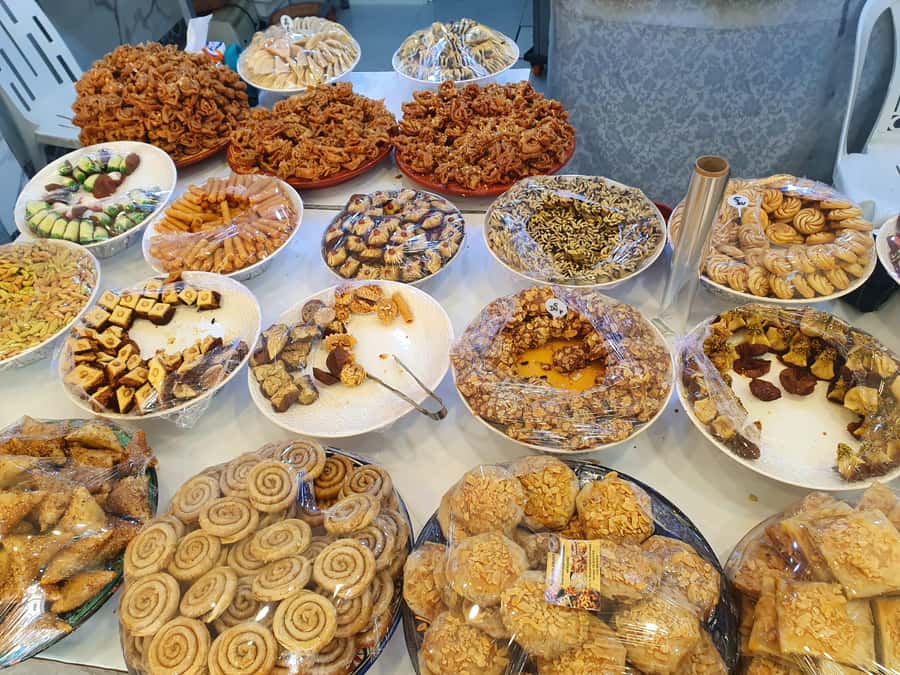
After dinner, the route includes a short stop at a viewpoint for street food, a tea ceremony, and traditional dance. You also receive two mint teas during the experience. This final pause helps slow the evening down after the heavier meal and gives you one more look at local customs.
The route then returns on foot to the post office, about five minutes away. Because the tour ends at the same general location where it starts, you can continue exploring Jemaa el Fnaa afterward or walk back toward your accommodation from a familiar point.
I like the ending because it does not leave you at an unfamiliar restaurant on the edge of town. It brings you back to the square, where you can decide if you want more music, food, or people-watching. You are free to continue your evening, although after four hours of eating, you may prefer a slow walk home.
Is $66 good value for four hours?
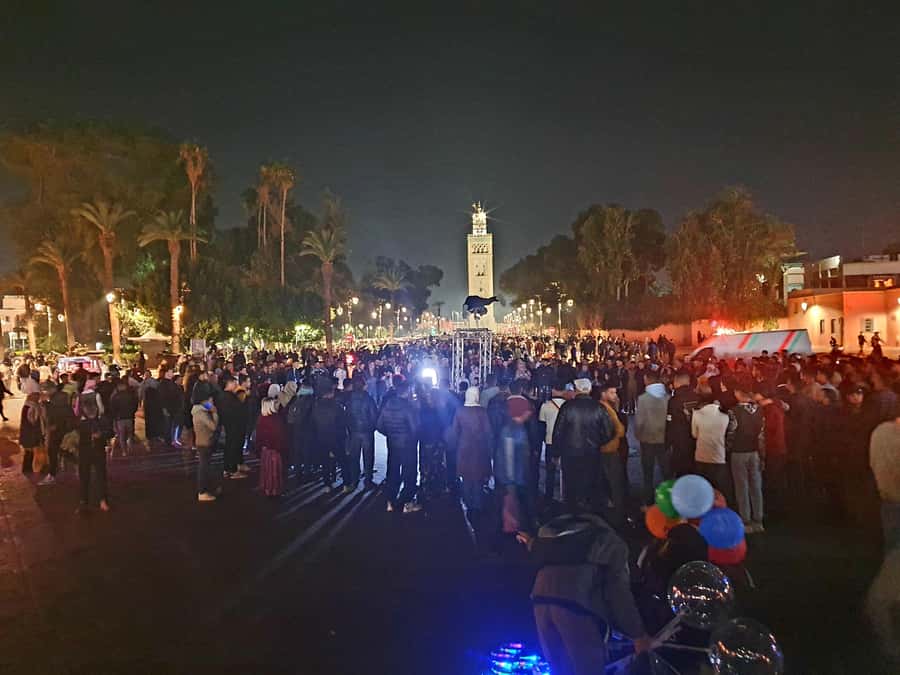
At $66 per person, this is not the cheapest way to grab food in Marrakech. You can buy individual snacks for far less. The price makes more sense when you count what is included: numerous tastings, fruit juice, dried fruit and nuts, pastries, the spice workshop, two mint teas, harira, and a main course of beef tanjia or vegetarian tajine.
You are also paying for the guide’s time and local access. The value rises if you want explanations, help choosing food, and a route that includes markets and local stops you might miss on your own. It is less compelling if you only want a quick dinner or prefer to choose every dish independently.
Additional drinks are not included, apart from the listed refreshments, teas, and bottled water during dinner. Keep that in mind when budgeting. The booking also offers free cancellation up to 24 hours before the activity and a reserve-now, pay-later option, which helps if your Marrakech plans are still shifting.
Who should book this food tour?
I would recommend it most strongly to you if you are visiting Marrakech for the first time, enjoy trying unfamiliar food, and want cultural explanation along with dinner. It is also a good match for anyone who likes a relaxed walking tour with plenty of chances to ask questions.
This is particularly useful on your first night. You learn the layout around Jemaa el Fnaa, get advice about avoiding tourist traps, and sample enough dishes to decide what you want to seek out later.
You may want to skip it if you dislike crowded markets, have a very restricted diet that cannot be arranged in advance, or prefer small meals. The combination of street food and a full dinner is generous. It is also not the best choice for someone who wants a short, quiet restaurant experience.
The activity is listed as wheelchair accessible, and private groups are available. Still, you should confirm any mobility needs in advance because the route involves walking through markets and souks. The tour does not use a bus or van between stops.
Should you book the Medina Tasting Tour?
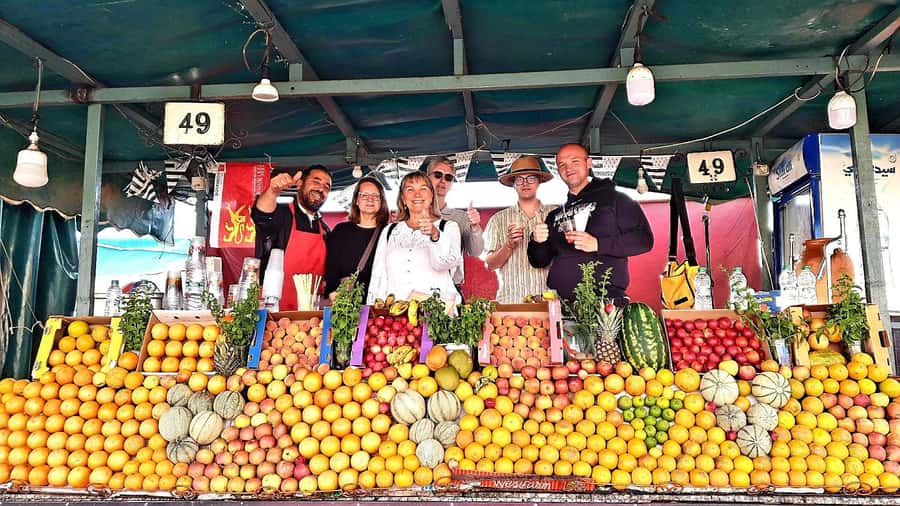
Book it if you want Marrakech explained through what people eat, sell, cook, and share. The strongest features are the balanced food route, the final tanjia meal, and the guide’s personal connection to local culture.
I would choose this over a basic market walk because you receive a full evening of tastings and a proper dinner. Just tell the operator about allergies at least four hours ahead, wear comfortable shoes, and save your appetite. If Youssef is available, his storytelling and friendly style may make the experience even more rewarding, but the real value is the combination of food, markets, and useful local guidance.
FAQ
Where does the Medina Tasting Tour start?
It starts in front of the main gate of the post office facing Jemaa el Fnaa Square in Marrakech. Look for the guide wearing an official red and green ribbon and badge.
Where does the tour finish?
The tour returns to the Maroc Post Office near Jemaa el Fnaa Square.
How long does the experience last?
The tour lasts four hours, though some individual route descriptions describe roughly three hours of active food and sightseeing stops.
What food is included?
Included food includes several street-food tastings, Moroccan sweet and savory pastries, dried fruit and nuts, fresh fruit juice, two to three additional snack stops, harira soup, and beef tanjia or vegetarian tajine.
Are drinks included?
Fresh fruit juice and two mint teas per person are included. Bottled water is included during dinner. Additional drinks are not included.
Can I choose a vegetarian main course?
Yes. The main course option includes vegetarian tajine as an alternative to beef tanjia.
How should I report allergies or dietary requirements?
You should communicate special dietary requirements or allergies at least four hours before the tour so the food can be planned.
Is the tour offered in English?
Yes. The live guide options are English and French.
Can I book a private group?
Yes. A private group option is available.
Can I cancel the activity?
You can cancel up to 24 hours in advance for a full refund.
Does the route stay the same during Ramadan?
The itinerary and tasting stops may vary during Ramadan and local holidays.
Just added around Morocco
- Marrakech Street food Tours★ 4.5 · 15 reviews
- Local Hidden Spots Street Food Tour in Medina Marrakech★ 5.0 · 30 reviews
- Marrakech Tasting Tour: Experience Local Street Food & Culture!★ 5.0 · 5 reviews
- 3 Hours Private Tour Marrakech Night Market★ 5.0 · 2 reviews
- Marrakech Street Food with +10Tasting & Tanjia Dinner|Guided Walk★ 5.0 · 21 reviews
- Taste Marrakech Street food tour from Medina★ 5.0 · 34 reviews
- Essaouira Guided Tour: 3 on 1 – Nightlife tour, Live like a local & Street food★ 4.5 · 32 reviews
- Fez Street Food Tour★ 4.5 · 33 reviews
Old Quarter and Medina Food Walks, compared.
Old Town, Creek, Museums, Souks, & Street Food Tour
What we made of it →
Old Town, Souks, Street Food, Guided Tour & Abra Ride
What we made of it →![[HOT] Hanoi Old Quarter Walking Street Food – Small Group Tour](https://cdn.streetfooddays.com/wp-content/uploads/hot-hanoi-old-quarter-walking-street-food-small-group-tour-400x267.jpg)
[HOT] Hanoi Old Quarter Walking Street Food – Small Group Tour
What we made of it →Old Town, Souks, Street Food, Guided Tour & Abra Ride
What we made of it →
Old Town, Street Food, Creek, Souks, & Emirati House
What we made of it →
Chania: Old Town Highlights Guided Tour with Street Food
What we made of it →Where this tour turns up